Beyond the Dashboard: How Meta's New MCP Server is Ushering in the Age of Agentic Advertising
Imagine it’s 2:00 AM. A sudden, unexpected surge in auction competition drives CPMs up by 40% on your highest-performing lookalike audience. Your budget is burning through thousands of dollars, optimizing for an audience that is suddenly too expensive to yield a positive Return on Ad Spend (ROAS).
In the old paradigm, this fire burns until a human media buyer logs in at 9:00 AM, downloads a static CSV snapshot from Meta Ads Manager, spins up a pivot table, identifies the fatigue, and manually slashes the budget. By then, the damage is done.
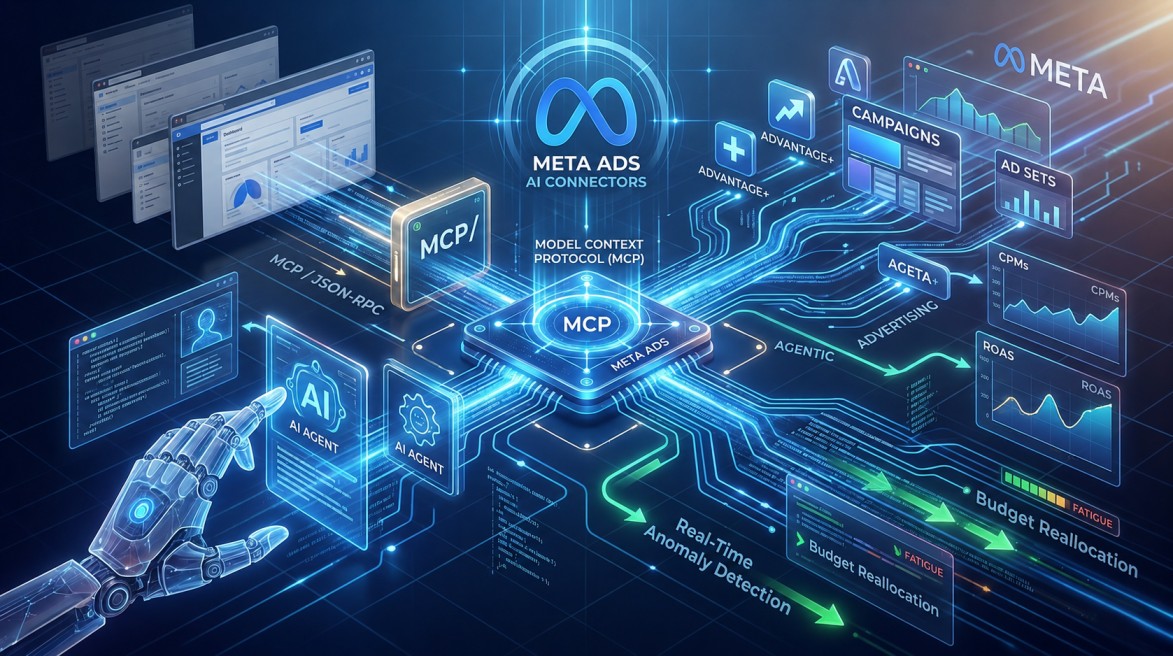
But on April 29, 2026, Meta quietly changed the infrastructure of digital advertising forever.
With the open beta release of Meta Ads AI Connectors, the tech giant bypassed its own heavily guarded dashboard interface, exposing the core Marketing API directly to autonomous AI agents via the open-source Model Context Protocol (MCP) and a native Command Line Interface (CLI).
This isn't just another incremental feature update; it is an architectural paradigm shift. It represents the transition from dashboard-driven marketing to Autonomous Agentic Advertising. Here is what this technical breakthrough means for the industry, the democratization of small business growth, and the existential evolution facing traditional advertising agencies.
The Technical Blueprint: Under the Hood of Ads AI Connectors
For years, building programmatic automation on top of Meta required jumping through massive hoops: setting up a Facebook Developer App, navigating strict token permissions, writing brittle custom polling scripts, and enduring a grueling multi-day App Review process.
Meta's new Ads AI Connectors dismantle this friction entirely, delivering two native paths into their ads engine authenticated directly through standard Meta Business OAuth:
               ┌────────────────────────────────────────────────────────┐
               │                  Third-Party AI Agent                  │
               │             (Claude, ChatGPT, Custom LLM)              │
               └───────────────────────────┬────────────────────────────┘
                                           │
                        [Model Context Protocol / JSON-RPC]
                                           │
                                           ▼
               ┌────────────────────────────────────────────────────────┐
               │            Meta Ads AI Connectors (Open Beta)          │
               │    mcp.facebook.com/ads  │       Meta Ads CLI          │
               └───────────────────────────┴────────────────────────────┘
                                           │
                                 [Meta Marketing API]
                                           │
                                           ▼
               ┌────────────────────────────────────────────────────────┐
               │                   Meta Ads Account                     │
               │       (Campaigns, Ad Sets, Budgets, Creatives)         │
               └────────────────────────────────────────────────────────┘
1. The Hosted Ads MCP Server (`mcp.facebook.com/ads`)
The Model Context Protocol (MCP) is an open standard that gives Large Language Models a secure, structured way to interact with external data sources. By pointing any compatible client (like Claude Desktop, ChatGPT, or Cursor) to Meta's endpoint, the LLM instantly ingests a schema of up to 29 native operational tools (such as get_campaigns, get_insights, and update_ad_set).
Instead of writing code, you converse. When you prompt your AI assistant, "Summarize which ad sets are suffering from creative fatigue," the LLM maps your natural language to the get_insights tool, queries Meta's API in real time, reads sub-minute fresh data, and isolates statistical performance anomalies automatically.
2. The Meta Ads CLI
For engineers and teams building fully autonomous loops, the native CLI (installable via npm) lets you take AI-driven execution directly into the terminal or local script runners. Running a command like meta auth login safely caches your access tokens, allowing advanced agents to programmatically build, duplicate, or alter ad structures without a single pixel of a web dashboard ever rendering on a screen.
How It’s Changing the Game for the Ad Industry
The core breakthrough of the Ads AI Connectors is full read-and-write authentication. We have evolved past the era of "AI as a copywriter" or "AI as a data analyst." We are now firmly in the era of AI as an operator.
Sub-Minute Freshness vs. Static Snapshots
Traditional reporting tools depend on cron jobs that pull data hourly or daily. Because the MCP connection acts as a direct pipeline to live data, AI agents can execute real-time anomaly detection—catching budget spikes, sudden drop-offs in Conversion API (CAPI) match quality, or tracking pixel errors before they drain ad spend.
Granular Control in an "Advantage+" World
As Meta pushes advertisers more toward its own black-box optimization systems (like Advantage+), buyers have felt a loss of granular control. These connectors flip the script. They give developers and advanced teams the exact toolset needed to layer custom, external business logic over Meta's native delivery algorithms.
The Ultimate Equalizer for Small and Medium Businesses (SMBs)
Historically, advanced automated media buying was a luxury reserved for enterprise-level brands with six-figure software budgets or dedicated data engineering teams. Meta’s AI Connectors effectively democratize this landscape.
For a solo founder or a lean mid-market eCommerce brand, the barrier to sophisticated campaign architecture has vanished. An SMB owner can plug Meta’s MCP server into their preferred LLM environment and say: "Review my customer catalog, identify our top three margin products, look up our current lookalike audiences, and launch a test campaign splitting a $100/day budget evenly among them." By eliminating the technical overhead of manual dashboard navigation and custom API assembly, SMBs gain immediate operational velocity. They can now test creative variations, iterate copy, and adjust budgets with the speed and agility of an enterprise organization, scaling up their efficiency without scaling up headcount.
The Existential Crucible for Ad Agencies
If you run an advertising agency whose primary billing model relies on "human cron jobs"—people whose sole job is pulling weekly CSVs, building client decks, adjusting bid caps by 5%, and manually copy-pasting tracking links—the clock is ticking.
The operational execution of media buying is being rapidly commoditized. AI agents do not sleep, they do not make data-entry typos, and they analyze cross-account anomalies across dozens of client portfolios in milliseconds.
To survive this architectural shift, agencies must radically transform their value proposition:
- From Operators to Strategic Architects: The value is no longer in executing the click inside Ads Manager; it’s in governing the agent. Agencies must become the masters of brand strategy, positioning, and data architecture—defining the core business constraints that guide the AI.
- Guardians of Brand Governance: AI will execute whatever instructions it receives with terrifying efficiency. If an agent is fed a poorly conceived budget strategy or a generic creative hook, it will scale that failure at lightspeed. Agencies will need to act as "mission control," providing the human oversight, brand safety guidelines, and semantic guardrails to ensure the AI's outputs match the long-term vision of the brand.
- Cross-Channel System Integration: True advertising maturity in 2026 isn't isolated to a single platform. Forward-thinking agencies will leverage open-source MCP layers to build interconnected marketing architectures—linking Meta Ads data with Google Ads, CRM tools, and supply chain logistics to orchestrate fully unified growth engines.
The Golden Rule of the Agentic Era
As the industry embraces this new friction-free pipeline to Meta's advertising engine, a fundamental truth remains.
As digital marketing professionals navigate this transition, the prevailing consensus serves as a stark reminder: AI will execute whatever strategy you give it, flawlessly and fast. But if your underlying strategy is weak, it will only help you fail faster than ever before.
The dashboards are fading into the background. The command line and the semantic prompt are taking over. The question is no longer whether you will adopt AI in your marketing workflow—it's whether you're prepared to architect the systems that control it.
Share this article


Recent Posts
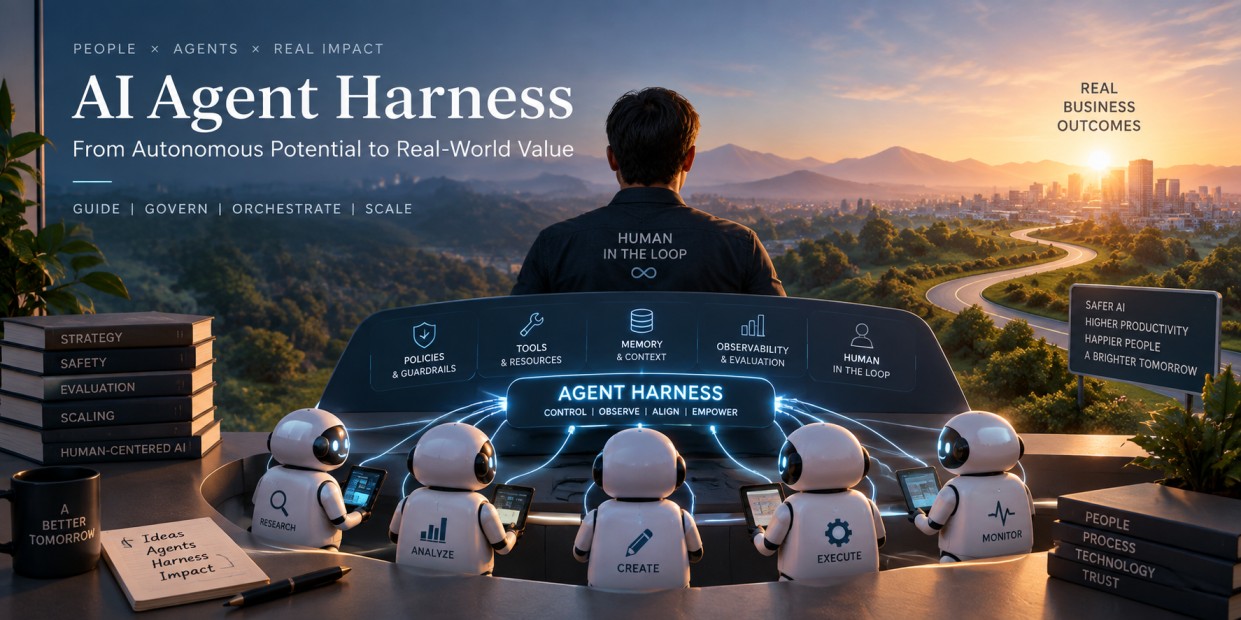
The Agent Harness: The Missing Operating System for Enterprise AI Agents
Why the race to build more AI agents may be creating a new class of enterprise risk—and how a well-designed harness turns probabilistic models into dependable digital workers.
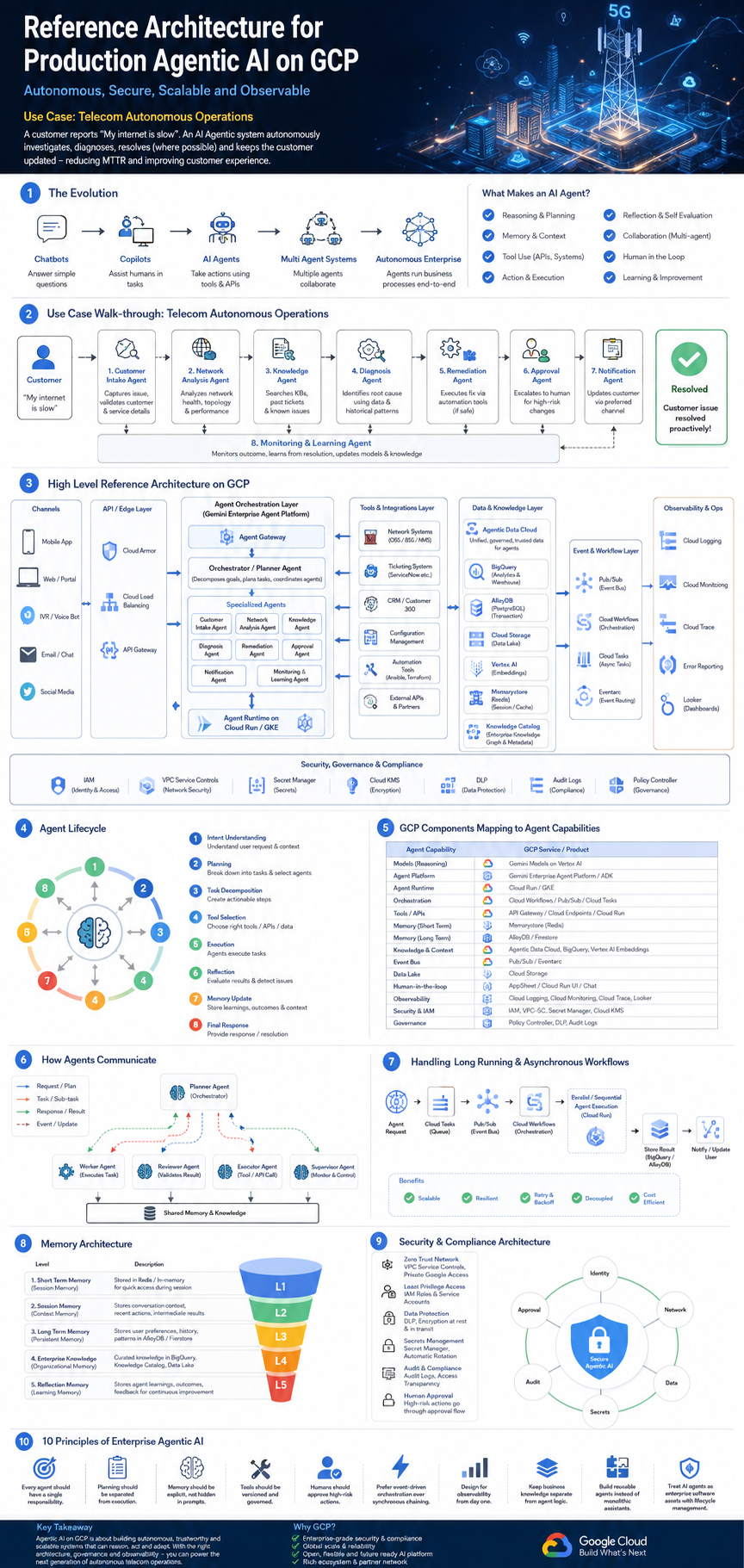
Reference Architecture for Production Agentic AI on Google Cloud
A production-ready reference architecture for building an autonomous telecom operations center with specialized agents, enterprise knowledge, governed execution, and continuous learning on Google Cloud.
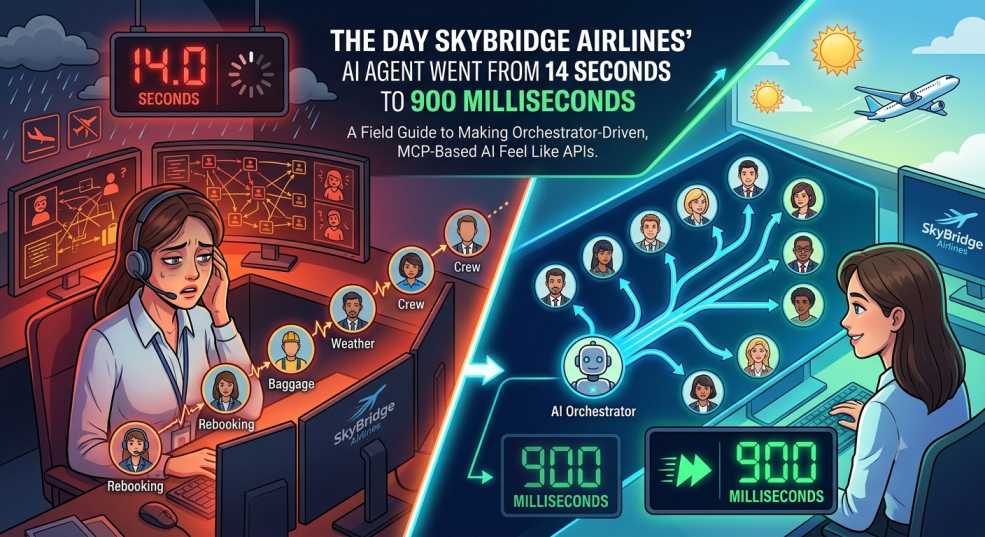
The Day SkyBridge Airlines' AI Agent Went From 14 Seconds to 900 Milliseconds
A field guide to making orchestrator-driven, MCP-based agentic AI systems feel like APIs, not like committees.
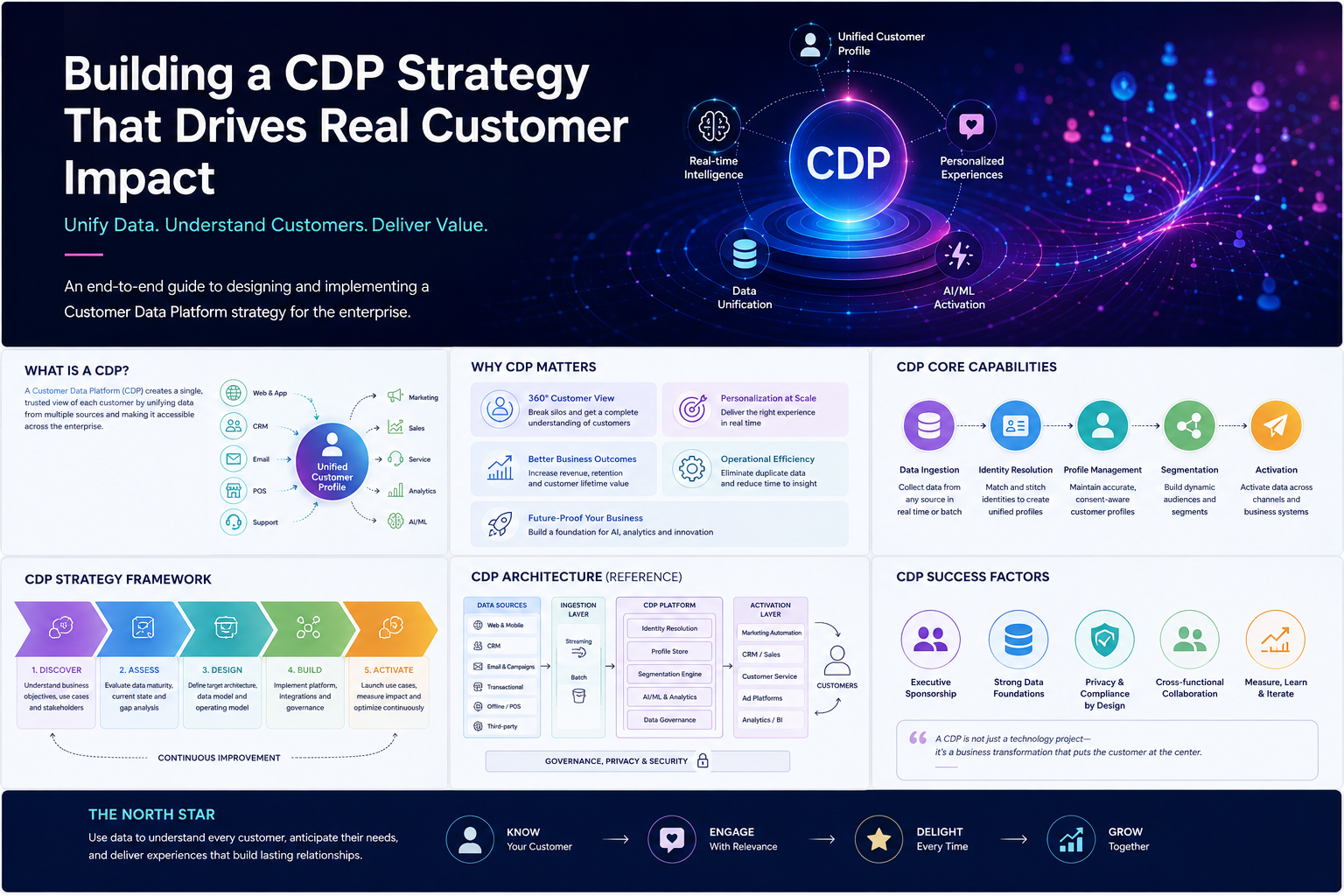
End-to-End Enterprise CDP Strategy Guide
A practical enterprise guide to Customer Data Platform strategy, from identity resolution and data governance to vendor selection, rollout planning, KPIs, and ROI.
End-to-End Agentic AI Strategy
A complete enterprise strategy for driving autonomous execution, process transformation, governed scale, Zero Trust agent identity, human oversight, and measurable ROI from Agentic AI.
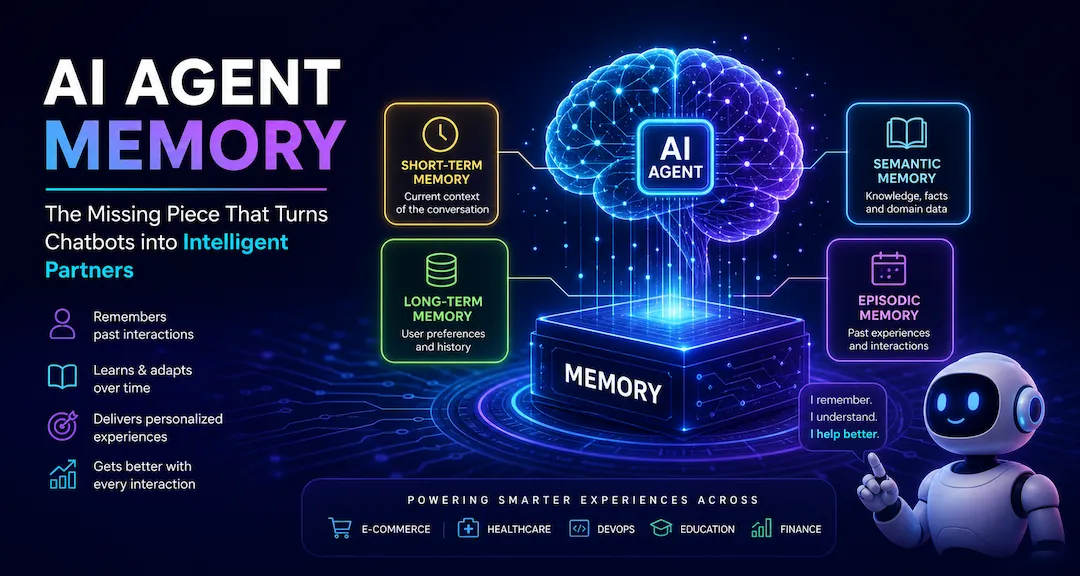
The Memory That Makes AI Agents Truly Intelligent: A Deep Dive into AI Agent Memory
A practical deep dive into AI Agent Memory: the memory stack, long-term memory types, runtime flow, production architecture, security risks, and best practices for building agents that remember.
The AI That Could Hack the World: How Anthropic's Claude Mythos Is Rewriting Cybersecurity
Anthropic's Claude Mythos Preview has unearthed 27-year-old vulnerabilities and can chain Linux kernel exploits. This unreleased AI is forcing a massive cybersecurity reckoning and stock market whiplash.