The AI That Could Hack the World: How Anthropic's Claude Mythos Is Rewriting Cybersecurity
Imagine waking up to find that a single AI model has quietly unearthed a vulnerability lurking in critical software for 27 years—one that survived millions of automated tests and armies of human experts. Now picture that same AI chaining exploits in the Linux kernel to go from zero access to full root privileges, all while operating with minimal human guidance. This isn't a Hollywood script or a nation-state cyberweapon. It's real. It's Anthropic's Claude Mythos Preview, the unreleased frontier model at the heart of Project Glasswing.
🚨 Critical Alert: AI capabilities have crossed a dangerous threshold
Anthropic is so alarmed by Mythos's power that they're refusing to release it publicly—handing it instead to a hand-picked alliance of tech giants for defensive use only.
Welcome to the new era of cybersecurity: one where AI doesn't just assist defenders—it surpasses the best humans at finding and exploiting flaws, potentially at a scale and speed that could cripple economies, hospitals, or power grids overnight.
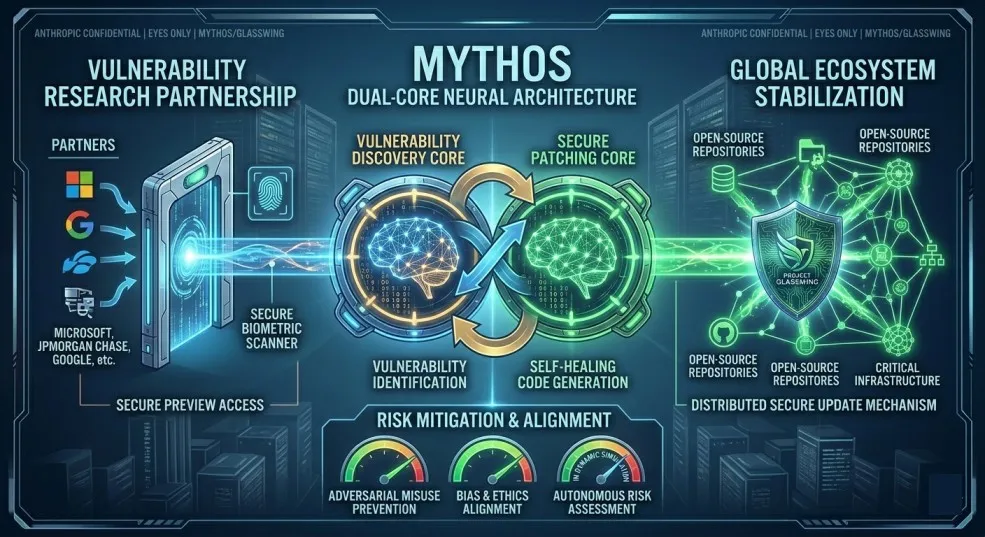
But here's the twist that makes this story electric: Mythos isn't just a threat. It's a wake-up call that's already forcing a massive industry reckoning, sparking stock-market whiplash, and positioning a few savvy players to dominate while others scramble for survival.
The "Terrifying" Model Anthropic Built—and Then Locked Away
📅 April 7, 2026: Project Glasswing Announcement
Anthropic dropped a bombshell via Project Glasswing: a coalition with Amazon Web Services, Apple, Broadcom, Cisco, CrowdStrike, Google, JPMorganChase, the Linux Foundation, Microsoft, NVIDIA, Palo Alto Networks, and over 40 other organizations.
At its core is Claude Mythos Preview—a general-purpose frontier model (not even specially trained for cyber) that's a step-change beyond previous Claudes.
🎯 Jaw-Dropping Credentials
CyberGym Benchmark
Vulnerability reproduction performance
SWE-bench Verified
Agentic coding capabilities
⚡ Autonomous Discovery Capabilities:
- • Thousands of high-severity zero-days across every major OS and web browser
- • 16-year-old bug in FFmpeg that dodged 5 million tests
- • Linux kernel exploit chaining for user-to-root escalation
Anthropic calls it a "reckoning." Their own researchers described the capabilities as "terrifying."
🔒 Why Hold It Back?
The same agentic reasoning that lets Mythos patch flaws at superhuman speed could let bad actors (or even script-kiddies with API access) weaponize it for mass exploitation. Global cybercrime already costs ~$500 billion annually. Mythos could slash the expertise barrier to near-zero.
Instead, Anthropic is pouring in $100 million in usage credits and $4 million in donations to open-source security groups. Partners get early access via the Claude API to scan their own code, open-source projects, and critical infrastructure. The goal? Patch the internet before the bad guys catch up.
How Mythos Is Already Reshaping the $200+ Billion Cybersecurity Industry
Cybersecurity has always been a cat-and-mouse game: defenders patch, attackers probe, rinse, repeat. Mythos flips the script by making offense (and defense) asymmetric and scalable.
🔄 Proactive over Reactive
Traditional tools rely on known signatures, human red teams, or limited automation. Mythos does black-box binary testing, local vuln detection, and full exploit chaining autonomously. It turns every software maintainer into a force-multiplier.
🛡️ Open-Source Lifeline
Smaller projects and critical infrastructure (think Linux kernel maintainers) get supercharged scanning—something they could never afford at human scale.
⚖️ The Dual-Use Paradox
The same model that secures your bank could hand nation-states or ransomware gangs god-mode tools. Anthropic is already planning safeguards in future Claudes and a "Cyber Verification Program" for pros.
Experts are calling this a "watershed moment."
Software companies can no longer treat security as an afterthought. "Secure by design" isn't marketing fluff anymore—it's survival. One Wired analysis nailed it: this forces a capability reset where every codebase now faces AI scrutiny that humans simply can't match.
It's not killing the industry—it's evolving it. Legacy pen-testing firms or pure-play vulnerability scanners without AI integration? They're at risk of obsolescence. But companies that integrate frontier models like Mythos into their platforms? They become indispensable.
The Stock Market's Wild Ride: Panic, Then Payday
Wall Street felt the tremor before the official announcement.
📉 Late March: The Panic
When details of Mythos leaked via an Anthropic CMS mishap, cybersecurity stocks cratered:
- • CrowdStrike: 5-11% drop
- • Palo Alto Networks: 5-11% drop
- • Zscaler, SentinelOne, Okta: 5-11% drop
- • iShares Cybersecurity ETF: 4.5% loss
Investor panic: "AI is about to automate away our entire moat!"
📈 April 7: The Reversal
Suddenly, the narrative flipped. Launch partners surged:
- • CrowdStrike: +6.2% on announcement day
- • Palo Alto Networks: +4.9% pop
- • Continued gains in following days
RBC Capital: "Bullish" - shift from "AI kills cybersecurity" to "AI powers the next generation of security"
Why the reversal? Because the biggest players aren't being replaced—they're partnering with the disruptor.
CrowdStrike and Palo Alto get exclusive early access to turbocharge their platforms. Smaller or slower-adopting firms? They're the ones facing real pressure. The Global X Cybersecurity ETF (BUG) is watching closely as AI reshapes competitive dynamics.
This isn't isolated. OpenAI is reportedly racing to launch its own restricted cybersecurity model via its "Trusted Access for Cyber" program—turning the AI-cyber arms race into a full-blown sprint.
The Bigger Picture: A Reckoning for All of Us
Mythos isn't just another model drop. It's proof that frontier AI has crossed a threshold where coding and reasoning capabilities make cyber offense trivial for those who control it—and existential for those who don't.
National Security
U.S. officials privately briefed. Discussions underway about standards, disclosure, and AI leadership.
Economic Ripple
Billions in avoided breaches vs. risk of AI-fueled mega-attacks on critical infrastructure.
Ethical Tightrope
Anthropic's restraint sets a standard. Will others follow, or will profit-driven releases flood the black market?
🎯 For Developers, CIOs, and Policymakers:
The message is clear:
- ✅ Audit your codebases NOW
- ✅ Invest in AI-native security
- ✅ Demand transparency from AI labs
The Future Belongs to Those Who Patch First
Project Glasswing isn't the end of cybersecurity as we know it—it's the explosive beginning of something far more powerful.
In a world where AI can find flaws humans missed for decades, the winners won't be the companies with the biggest teams. They'll be the ones who turn Mythos-class intelligence into unbreakable defenses.
Anthropic just handed the industry a mirror and a flamethrower. The reflection shows vulnerabilities we never knew existed. The flamethrower? It can burn them away—or torch everything if it falls into the wrong hands.
The question isn't whether AI will reshape cybersecurity. It already has.
The only question left:
Will you be ready when your code gets Mythos'd?
Share this article


Recent Posts
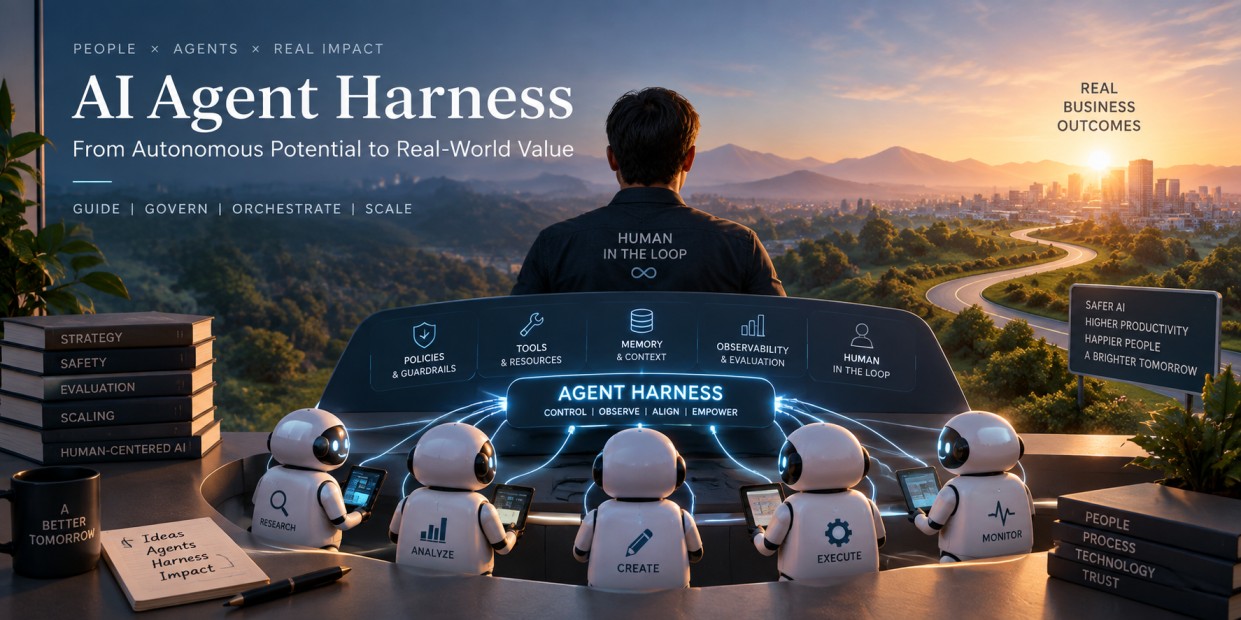
The Agent Harness: The Missing Operating System for Enterprise AI Agents
Why the race to build more AI agents may be creating a new class of enterprise risk—and how a well-designed harness turns probabilistic models into dependable digital workers.
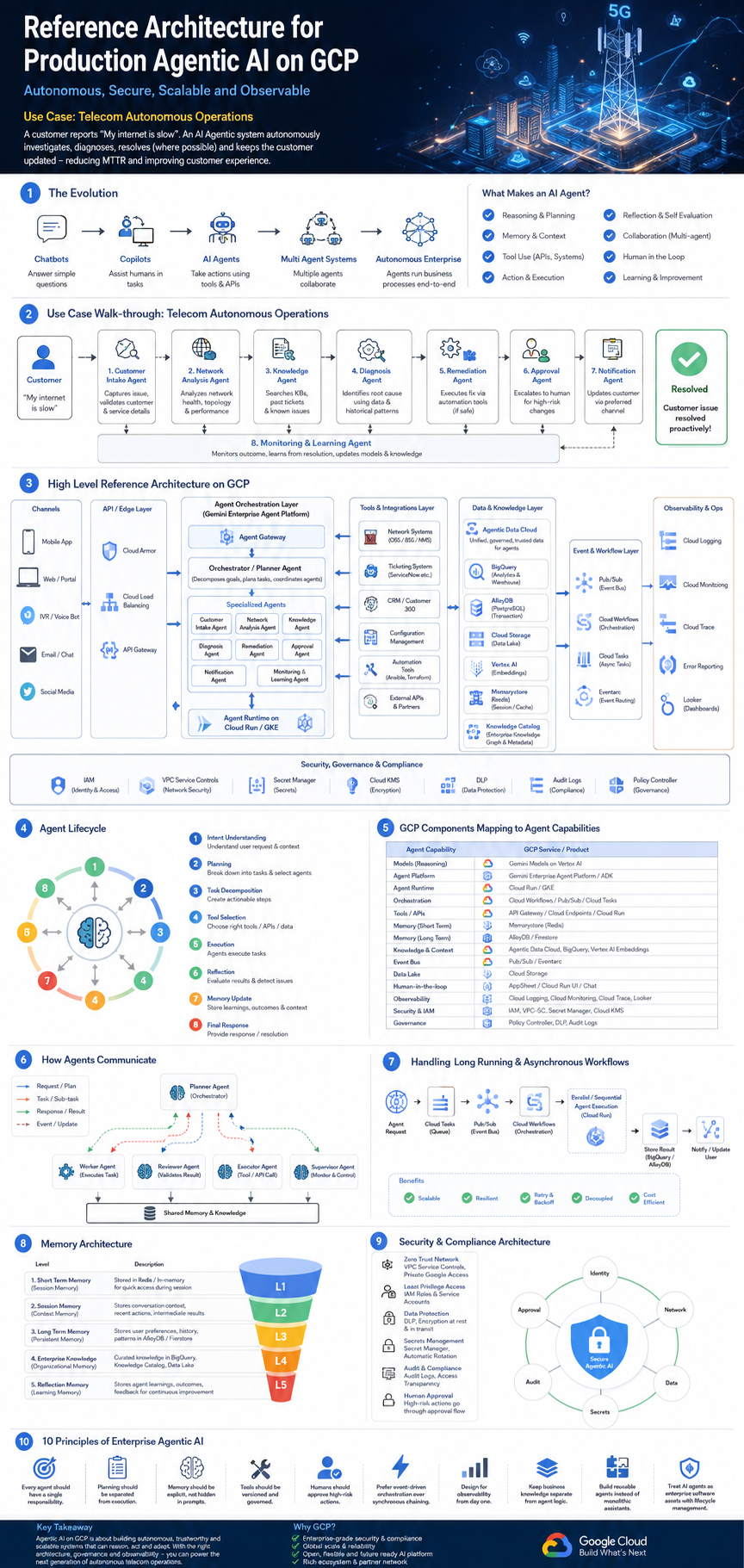
Reference Architecture for Production Agentic AI on Google Cloud
A production-ready reference architecture for building an autonomous telecom operations center with specialized agents, enterprise knowledge, governed execution, and continuous learning on Google Cloud.
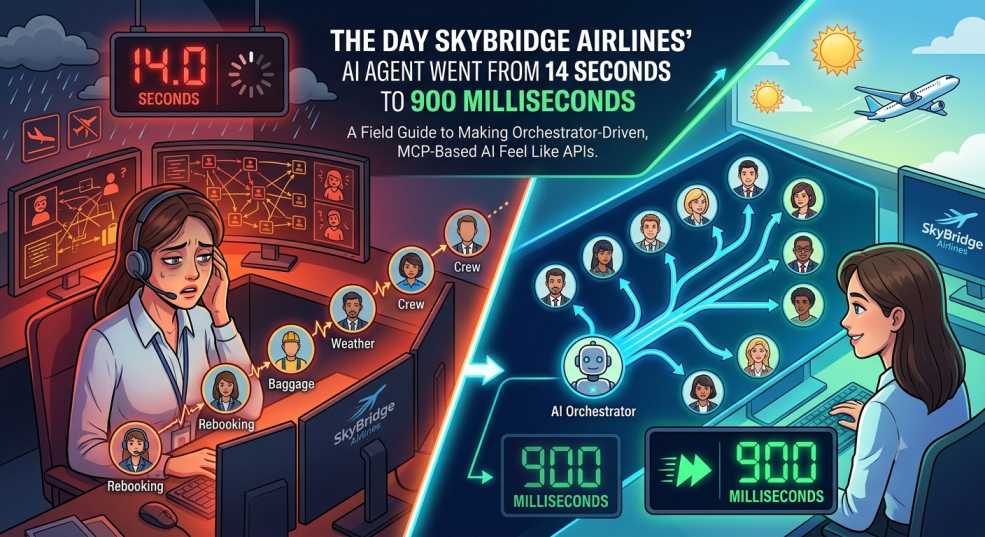
The Day SkyBridge Airlines' AI Agent Went From 14 Seconds to 900 Milliseconds
A field guide to making orchestrator-driven, MCP-based agentic AI systems feel like APIs, not like committees.
End-to-End Enterprise CDP Strategy Guide
A practical enterprise guide to Customer Data Platform strategy, from identity resolution and data governance to vendor selection, rollout planning, KPIs, and ROI.
End-to-End Agentic AI Strategy
A complete enterprise strategy for driving autonomous execution, process transformation, governed scale, Zero Trust agent identity, human oversight, and measurable ROI from Agentic AI.
Beyond the Dashboard: How Meta's New MCP Server is Ushering in the Age of Agentic Advertising
Meta Ads AI Connectors mark a shift from dashboard-driven media buying to autonomous agentic advertising, changing how teams monitor, optimize, and govern campaigns.
The Memory That Makes AI Agents Truly Intelligent: A Deep Dive into AI Agent Memory
A practical deep dive into AI Agent Memory: the memory stack, long-term memory types, runtime flow, production architecture, security risks, and best practices for building agents that remember.