The Future of Agentic AI in Enterprise Applications
Enterprise AI is entering a new phase.
We’re moving beyond copilots and chat-based assistants into something far more transformative: Agentic AI — systems that don’t just respond to prompts, but autonomously plan, decide, orchestrate, and execute multi-step outcomes across enterprise environments.
According to recent industry research, executives have a 3–6 month window to decide strategy, investment levels, and partnerships to remain competitive in this AI race.
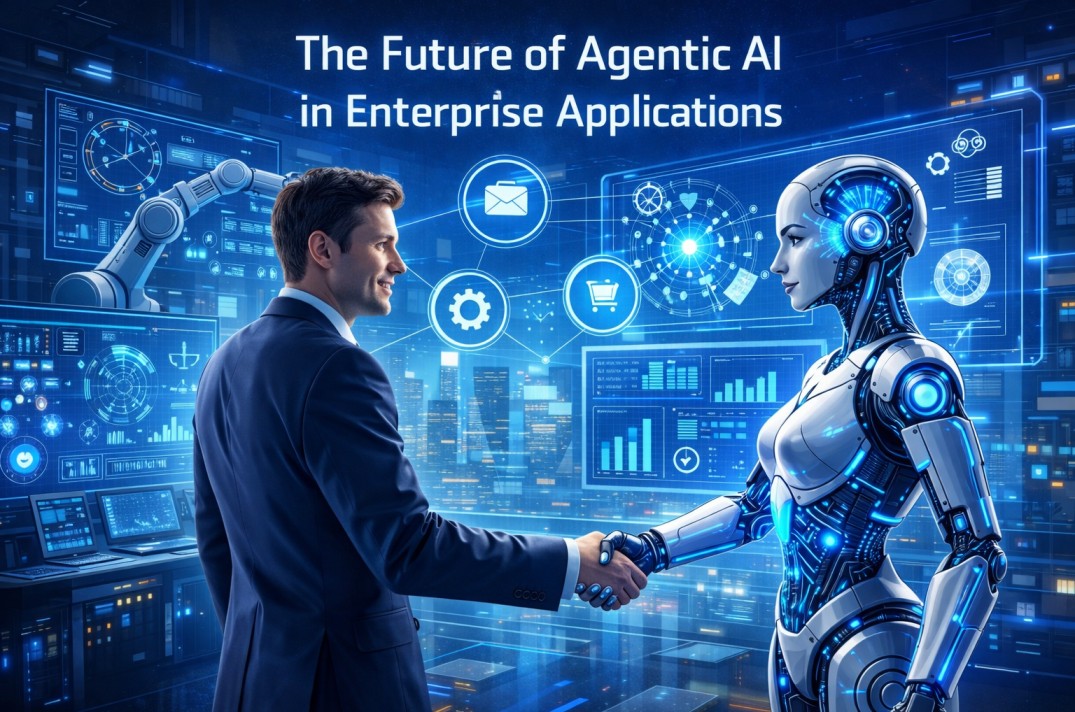
The shift is not incremental. It’s architectural.
Here’s what’s happening — and what leaders should do now.
What Is Agentic AI?
Agentic AI refers to AI systems capable of:
- Goal-oriented execution
- Autonomous decision-making (within defined boundaries)
- Multi-step reasoning and planning
- Tool/API integration
- Memory and statefulness
- Learning and behavioral adaptation
Unlike AI assistants that augment humans, agentic systems can orchestrate end-to-end outcomes across multiple applications — without requiring a user interface.
They are not just digital helpers. They are becoming digital operators.
The Five Stages of Enterprise Agentic Evolution
Enterprise AI will evolve rapidly from embedded assistants (2025) to dynamic multi-agent ecosystems (2029). Here’s what that journey looks like.
1) AI Assistants (2025)
Projection: By the end of 2025, AI assistants will be embedded in ~80% of enterprise applications.
- Augment human productivity
- Operate reactively
- Always require a UI
- Depend on human input
Strategic implication: Redesign user experiences around AI-assisted interfaces and strong APIs — shifting from application-centric to outcome-centric engagement.
2) Task-Specific Agents (2026)
Projection: By 2026, 40% of enterprise apps will integrate task-specific agents (up from <5% today).
- Execute complex end-to-end tasks
- Operate with limited human oversight
- Move from reactive to proactive
Example: an AI cybersecurity agent autonomously scanning logs, detecting anomalies, and triggering response workflows.
Strategic implication: “Secure by design” becomes mandatory. Continuous evaluation and governance become critical. Domain-specific models and structured guardrails become essential.
3) Collaborative Multi-Agent Systems (2027)
Projection: By 2027, one-third of agentic implementations will combine multiple agents with different skills.
Instead of one intelligent agent, we’ll see forecasting agents, planning agents, optimization agents, and monitoring agents coordinating dynamically.
Standardization becomes critical. Emerging protocols such as:
- Anthropic’s Model Context Protocol (MCP)
- Google’s Agent2Agent (A2A)
- IBM’s Agent Communication Protocol (ACP)
Strategic implication: Workflow re-orchestration replaces simple automation. Interoperability and standards become competitive differentiators. Governance complexity increases significantly.
4) AI Agent Ecosystems (2028)
Projection: By 2028, one-third of enterprise user experience will shift from native apps to agentic front ends.
- Users express goals
- Agents orchestrate multiple applications
- Applications become execution engines
- Business capabilities are dynamically assembled
This changes business models: outcome-based pricing, cross-vendor ecosystem collaboration, agent-specific tooling, new revenue streams — with higher governance requirements.
Disintermediation risk: If the agent owns the customer interaction, who owns the customer?
5) The “New Normal” (2029)
- 50%+ of knowledge workers will develop agent governance skills
- Employees will create agents on demand
- AI will be embedded into everyday work like smartphones today
Enterprise culture must evolve: continuous AI literacy, experimentation mindset, governance-first architecture, and cross-functional AI strategy.
Why Many Organizations Will Fail
The hype around “agentic AI” is causing confusion. Common risks include:
- Treating assistants as agentic systems
- Deploying autonomy without governance
- Ignoring interoperability standards
- Underestimating security and compliance exposure
Agentic AI spans a maturity spectrum — from semiautonomous helpers to dynamic ecosystems. Not every use case needs full autonomy. Structured, phased adoption is key.
What Product Leaders Must Do Now
- Map AI agent maturity to measurable business outcomes
- Invest in domain-specific models and guardrails
- Design secure-by-default autonomous workflows
- Build API-first, interoperable architectures
- Rethink pricing models and ecosystem partnerships
- Upskill teams for agent governance and orchestration
This is not about adding AI features. This is about redesigning enterprise applications for autonomous collaboration.
Final Thought
We are witnessing a shift from:
Software as a tool → Software as a workforce.
The enterprises that succeed will not be those who deploy the most AI features. They will be those who design intelligent ecosystems where humans and agents collaborate seamlessly.
The AI race is no longer about models. It’s about orchestration.
Share this article


Recent Posts
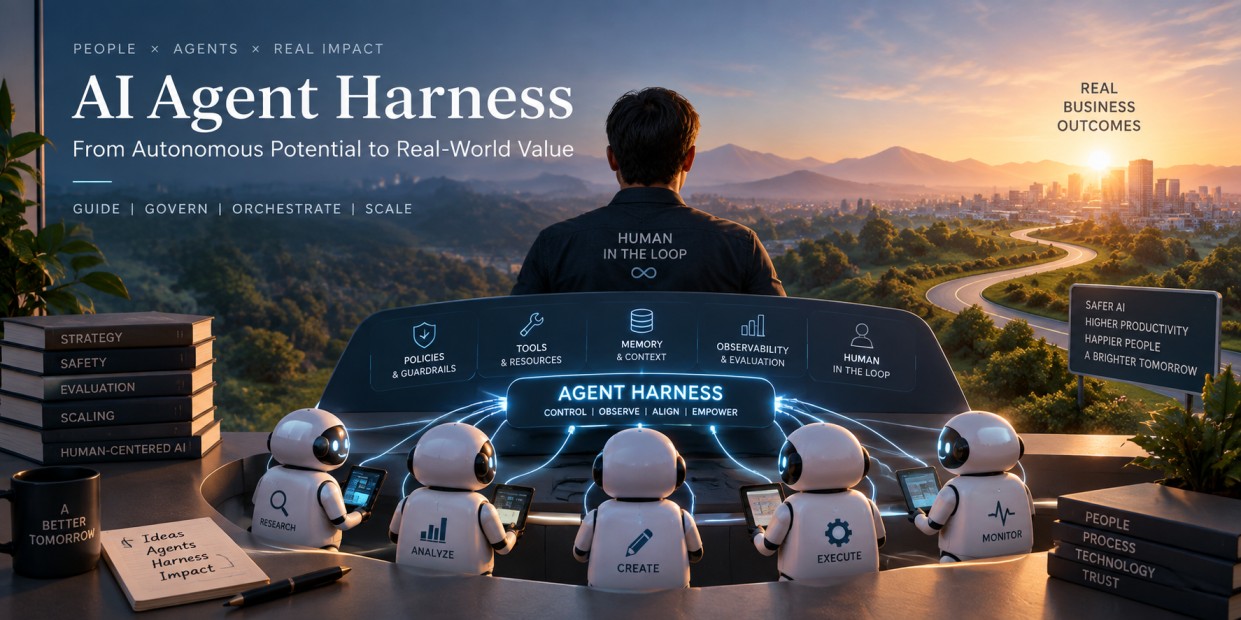
The Agent Harness: The Missing Operating System for Enterprise AI Agents
Why the race to build more AI agents may be creating a new class of enterprise risk—and how a well-designed harness turns probabilistic models into dependable digital workers.
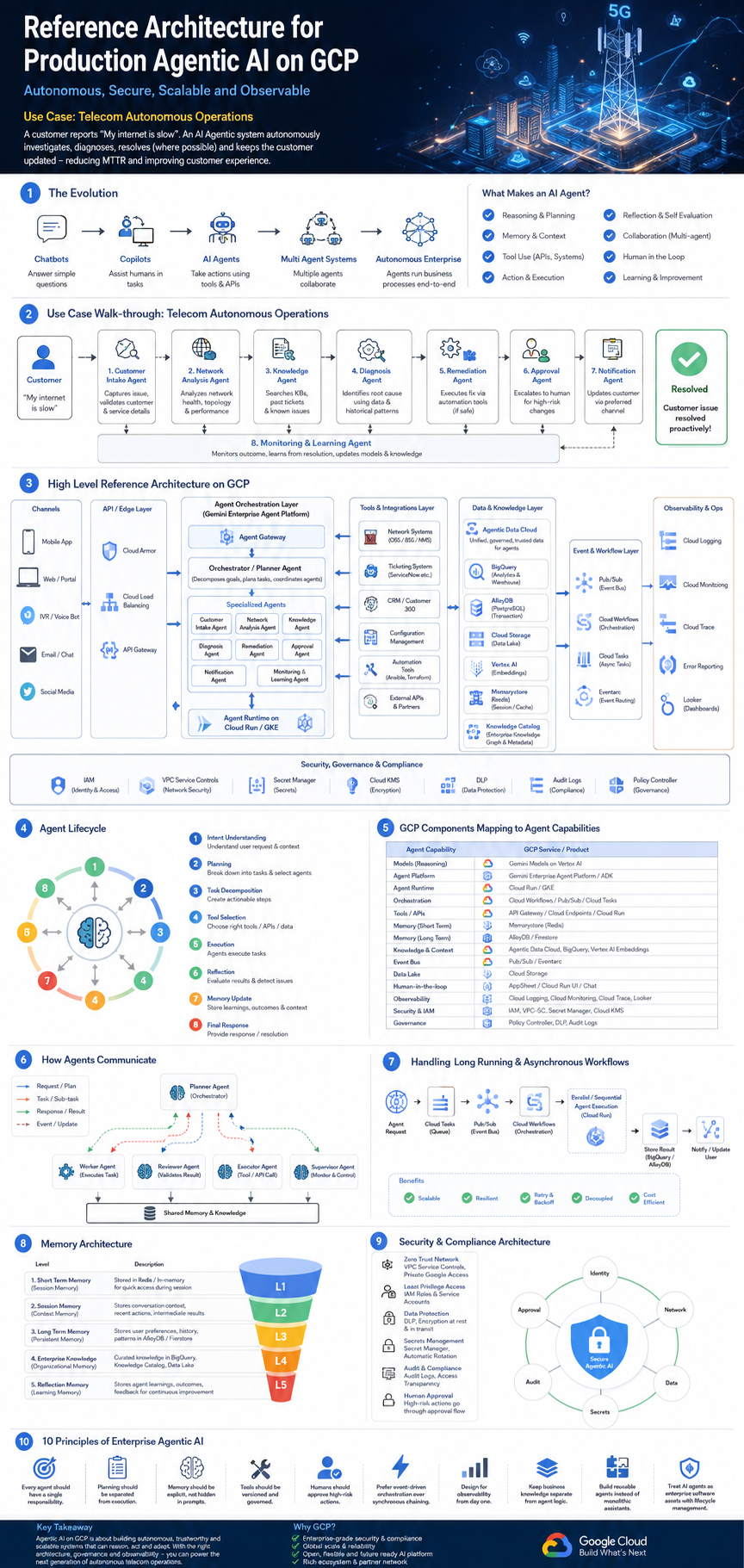
Reference Architecture for Production Agentic AI on Google Cloud
A production-ready reference architecture for building an autonomous telecom operations center with specialized agents, enterprise knowledge, governed execution, and continuous learning on Google Cloud.
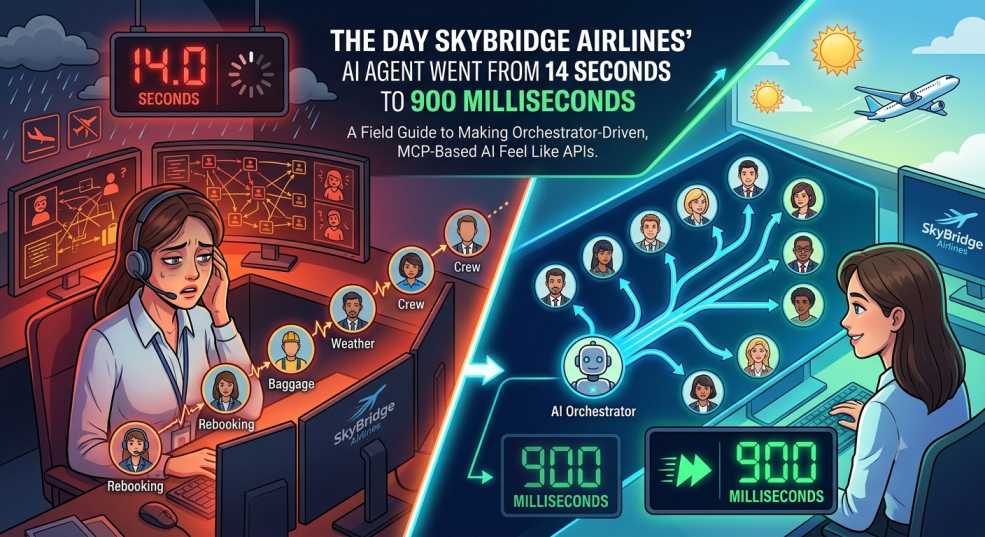
The Day SkyBridge Airlines' AI Agent Went From 14 Seconds to 900 Milliseconds
A field guide to making orchestrator-driven, MCP-based agentic AI systems feel like APIs, not like committees.
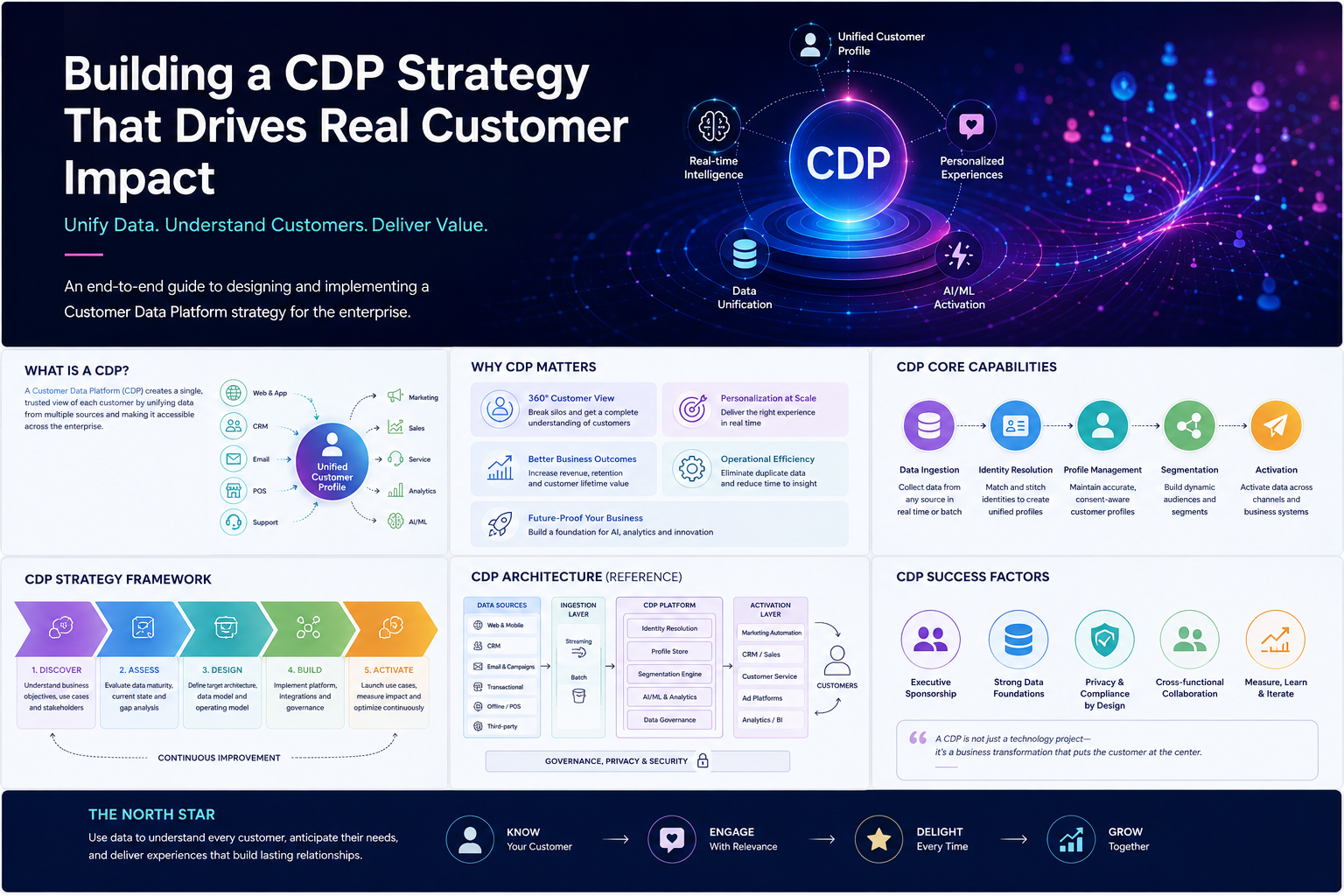
End-to-End Enterprise CDP Strategy Guide
A practical enterprise guide to Customer Data Platform strategy, from identity resolution and data governance to vendor selection, rollout planning, KPIs, and ROI.
End-to-End Agentic AI Strategy
A complete enterprise strategy for driving autonomous execution, process transformation, governed scale, Zero Trust agent identity, human oversight, and measurable ROI from Agentic AI.
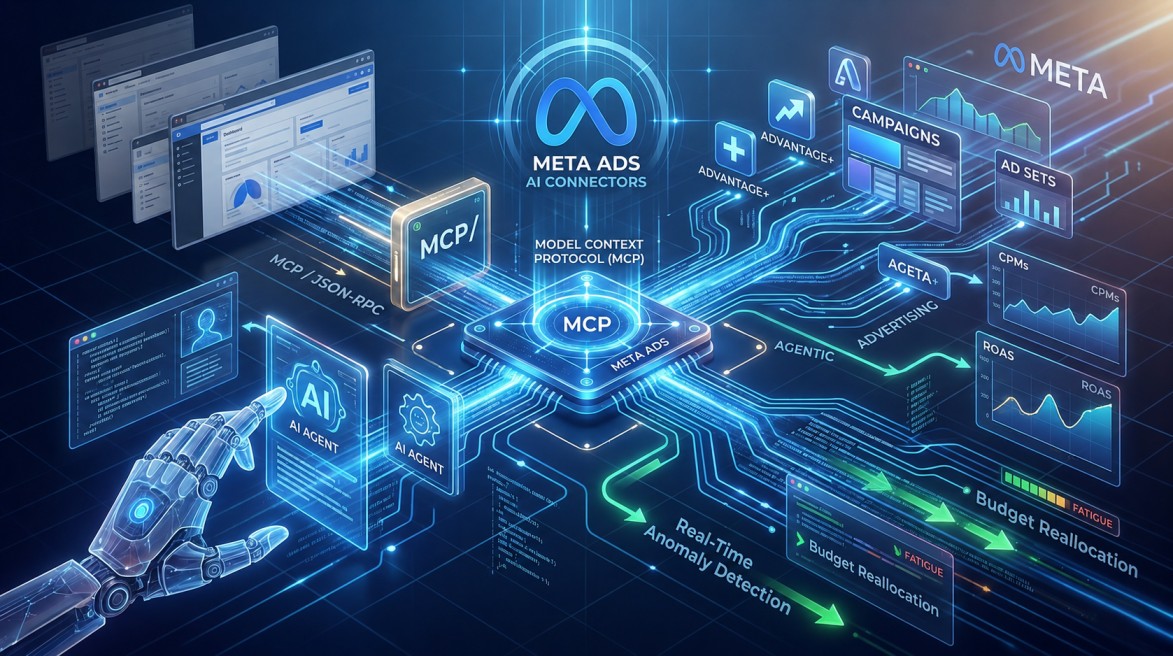
Beyond the Dashboard: How Meta's New MCP Server is Ushering in the Age of Agentic Advertising
Meta Ads AI Connectors mark a shift from dashboard-driven media buying to autonomous agentic advertising, changing how teams monitor, optimize, and govern campaigns.
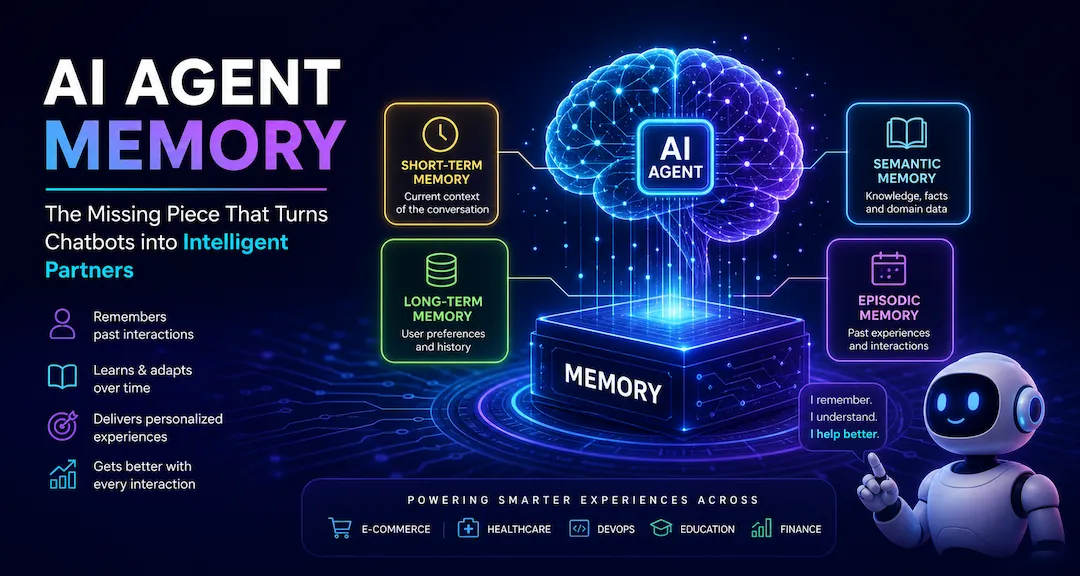
The Memory That Makes AI Agents Truly Intelligent: A Deep Dive into AI Agent Memory
A practical deep dive into AI Agent Memory: the memory stack, long-term memory types, runtime flow, production architecture, security risks, and best practices for building agents that remember.