Hacked Intelligence: The Rising Threat of AI Exploitation and How to Fight Back
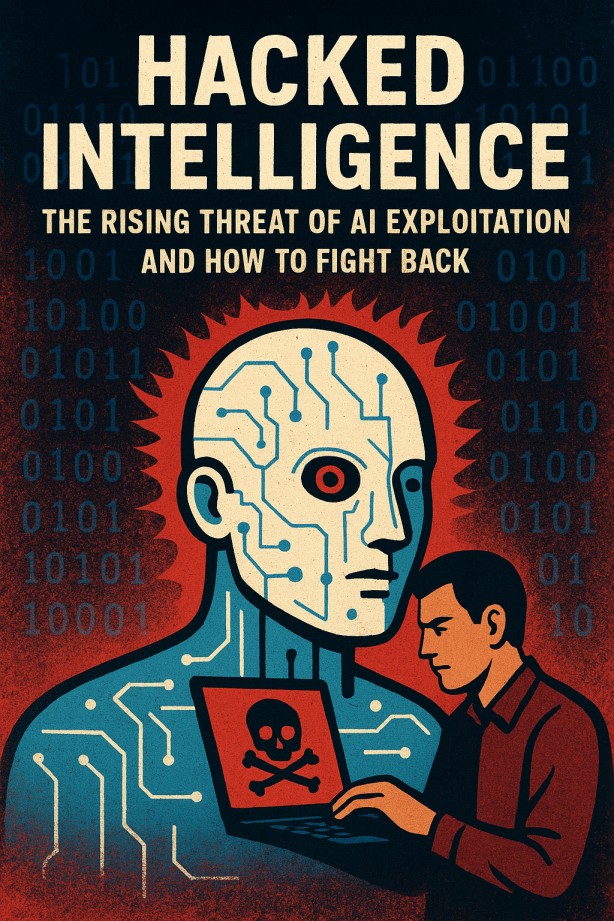
Real Story: It's July 2025, and McDonald's suffers a massive data breach affecting millions of job applicants. The culprit? A vulnerability in their AI-driven hiring system that allowed hackers to inject malicious data, exposing sensitive personal information. What if the next target is your bank's fraud detection AI, or the autonomous vehicle guiding your commute? Welcome to the era where artificial intelligence isn't just a tool—it's a battleground. As AI permeates every aspect of our lives, hackers are turning this double-edged sword against us, exploiting its power for unprecedented attacks. But fear not: knowledge is your shield. In this article, we'll unravel the dark side of AI hacking, explore real-world vulnerabilities, and arm you with strategies to stay ahead.
Source: Wired
The Dual Nature of AI: Target and Weapon in the Cyber Wars
AI is no longer science fiction—it's the new frontier of cybersecurity, where it serves as both a formidable weapon for attackers and a vulnerable target for exploitation. On one hand, hackers are weaponizing AI to supercharge traditional threats. Think AI-enhanced phishing: Generative models like LLMs create hyper-personalized emails or deepfake voice clones of CEOs, tricking employees into handing over credentials. In 2025, we're seeing a 20% drop in generic phishing volumes, but a surge in sophisticated AI-driven variants, including voice phishing (vishing) that scales attacks effortlessly.
Even more chilling? AI-powered malware that's polymorphic—constantly mutating its code to evade detection. Tools like automated exploit generators lower the barrier for novice hackers, allowing them to scan for vulnerabilities and craft attacks in minutes. Recent incidents, such as CL0P-linked hackers breaching dozens of organizations via high-volume email campaigns in September 2025, show how AI amplifies social engineering.
Flip the coin, and AI becomes the hunted. Adversarial machine learning turns AI systems against themselves. For instance, "shadow AI"—unsanctioned models used by employees—creates blind spots, leading to undetected exploits. This duality is the "double-edged sword" narrative: AI bolsters defenses like threat detection in SOCs, but its misuse can devastate them. As one expert puts it, by 2025, we're entering "machine-versus-machine warfare," where AI agents hack autonomously, outpacing human responders.
Ever wondered if your smart home AI could be turned into a spy? Keep reading—the vulnerabilities might shock you.
Unmasking the Core Vulnerabilities: How Hackers Crack AI
AI isn't invincible. Its "black box" nature hides exploitable weaknesses, from subtle input tweaks to outright theft. Here's a breakdown of the most pressing attack types, backed by 2025 trends.
Adversarial Examples and Evasion Attacks
These are the stealth bombers of AI hacking. By adding imperceptible noise—like a sticker on a stop sign—an attacker can fool models into catastrophic errors. Self-driving cars might misread signs, or facial recognition systems could grant unauthorized access. Real-world example: In 2025, evasion attacks on AI accelerators exposed training data, bypassing defenses and raising privacy alarms. NIST classifies these as one of four major threats, alongside poisoning and privacy attacks.
Data Poisoning and Model Poisoning
Poison the well, corrupt the water. Attackers inject malicious data into training sets, creating backdoors or biases. A small number of tainted samples— as few as 250 documents—can backdoor entire LLMs, triggering harmful outputs on command. In 2025, this led to "gibberish" outputs in models like ChatGPT, highlighting real-world chaos from poisoned data. OWASP warns of vulnerabilities in pre-training or fine-tuning data.
Prompt Injection and Jailbreaking
The verbal sleight-of-hand. Crafty inputs bypass LLM safeguards, forcing models to generate malicious code or leak data. Indirect injections hide in websites or emails, hijacking browsing-capable AIs. A 2025 study showed over 90% success rates across models like GPT-4 and Claude-3.5. On X, discussions reveal creative exploits, like embedding instructions in images for Gemini.
Model Theft and Inference Attacks
Steal the brain, own the intelligence. Querying a model repeatedly allows extraction of its parameters, cloning proprietary tech. Membership inference reveals if specific data was used in training, violating privacy. In 2025, new techniques demonstrated easy model stealing, undermining IP rights.
Supply Chain Attacks
The weak link in the chain. Targeting libraries, pre-trained models, or third-party data corrupts entire systems. In 2025, AI supply chains face faster-expanding vulnerabilities than defenses, with exploits in frameworks like Ray.
| Attack Type | Key Example | Impact Level | Prevalence in 2025 |
|---|---|---|---|
| Adversarial Examples | Sticker on stop sign fools AV | High (Safety risks) | Rising, esp. in hardware |
| Data Poisoning | 250 docs backdoor LLM | Critical (System-wide compromise) | Common in training sets |
| Prompt Injection | Hidden image instructions | Medium-High (Data leaks) | Widespread in agents |
| Model Theft | Query-based cloning | High (IP loss) | Increasing with APIs |
| Supply Chain | Poisoned libraries | Critical (Ecosystem-wide) | Exploding risks |
If a single poisoned dataset can hijack an AI, what's stopping hackers from targeting yours? The defenses are simpler than you think.
Fortifying the Future: Defenses, Regulations, and the Rise of Autonomous Agents
The good news? We're not defenseless. Robust countermeasures are evolving rapidly.
Start with basics: Validate and cleanse training data to thwart poisoning. Adversarial training exposes models to attacks during development, building resilience. For prompt injection, defensive prompts in function descriptions slashed success rates to near zero in tests. Secure AI DevOps integrates security from data collection to deployment. Explainable AI (XAI) adds transparency, spotting manipulations early.
Regulations are catching up. The EU AI Act enforces risk-based rules, banning high-risk uses and mandating audits. In the US, Executive Order 14179 prioritizes national security, directing agencies to lead in AI while addressing threats. Bug bounty programs, like Google's AI VRP, incentivize ethical disclosures.
Looking ahead, autonomous AI agents pose the next big risk. These self-acting systems can chain attacks without human input, eroding traditional defenses. Vulnerabilities like plan injection—corrupting an agent's internal tasks—highlight needs for secure memory and identity management. As one X post warns, agents are the "new insider threat"—limit their access, monitor behaviors, and assume compromise.
Conclusion: Stay Vigilant in the AI Arms Race
AI hacking isn't a distant threat—it's here, evolving faster than ever. From polymorphic malware to poisoned models, the stakes are high, but so are the solutions. By understanding these vulnerabilities and implementing layered defenses, we can harness AI's power without falling victim to it. The future belongs to those who prepare today. What's your first step in securing your AI world? Share in the comments—let's build a safer digital frontier together.
Share this article


